

Richard casino Plinko
Introduction
Plinko looks almost too simple to deserve a long analysis. You choose a stake, set a risk level, drop a ball, and watch it bounce through a field of pins until it lands in a multiplier slot. That is the entire visual idea. Yet in practice, Richard casino Plinko creates a very specific kind of gambling session: fast, highly readable, and psychologically sharper than many players expect on first launch.
I have reviewed a lot of casino products over the years, and Plinko stands out for one reason in particular. It strips away the decorative layer that usually surrounds online gambling. There are no reels, no symbols, no Richard Casino bonus terms wagering and promo details rounds pretending to add narrative depth. The whole experience is built around trajectory, probability distribution, and the tension between frequent small outcomes and rare high multipliers. Because of that, Plinko is one of the clearest examples of how a simple interface can hide a very different real-money experience depending on the settings a player chooses.
For Canadian players exploring Richard casino Plinko, the useful question is not whether the game is visually attractive or currently trendy. The real question is what this format actually offers, how the math behaves across different risk levels, and whether its rhythm fits the way you like to play. That is what I will focus on here.
What Plinko is and why it draws so much attention
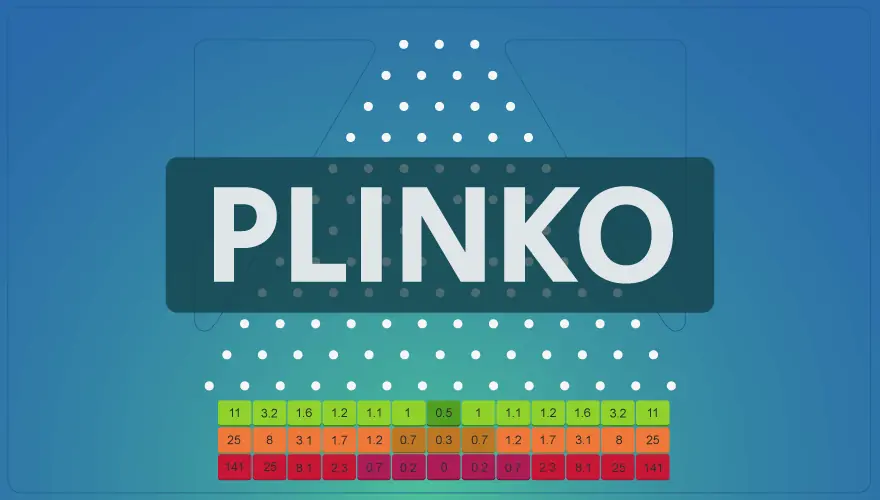
At its core, Plinko is a probability-based casino game inspired by the familiar pegboard concept. A ball is released from the top of the board and hits a sequence of pins on the way down. At each contact point, it deflects left or right until it finally lands in one of the payout zones at the bottom. Each bottom slot has a multiplier attached to it, and that multiplier determines the return for that drop.
Plinko’s pull starts with how fast the game gets through to you. The layout needs no explanation, so a first-timer understands the goal within seconds. What really hooks people, though, is that the result plays out right in front of you. A slot spin hides its outcome behind the reels and reveals it after the fact, but Plinko shows the ball’s whole journey down the board. That visible path never gives you control, but it builds a sense of involvement — you experience the randomness as it happens rather than after the fact. In most cases, that live, physical-feeling progression is what separates Plinko from standard slots for casual players.
There is also a strong contrast between ordinary and exceptional outcomes. Most drops tend to settle in the central area of the board, where lower multipliers are concentrated. The outer edges, where the biggest returns usually sit, are harder to reach. This creates a pattern that is easy to understand emotionally: many modest results, occasional dry spells, and rare moments when the ball drifts far enough to trigger a standout multiplier.
One of the most memorable things about Plinko is that it often feels fairer than it feels generous. I do not mean fair in a legal sense alone, but in the way the game communicates its logic. You can literally see why the middle is crowded and why the edges are rare. That transparency is a major reason the format has become so noticeable across modern online casinos.
How the mechanics work in Richard casino Plinko
Richard casino Plinko usually follows the standard structure of the format. Before each round, the player sets a bet amount and chooses a risk level. In many versions, there may also be a choice related to the number of rows, which affects the shape of the distribution and the spread of multipliers. Once the settings are locked in, the ball is dropped from the top and travels downward through the board.
From a visual point of view, the movement appears intuitive: the ball bounces from peg to peg and gradually drifts toward the bottom. From a practical point of view, what matters is that each deflection contributes to a probability curve. The central landing zones are statistically more accessible because there are more route combinations that lead there. The extreme left and right slots are harder to hit because fewer paths end at the edges.
This is the key to understanding Plinko properly. The board does not behave like a uniform field where every multiplier has the same chance. It behaves more like a bell-shaped distribution. The middle outcomes are common. The edge outcomes are rare. The larger the displayed multiplier at the edge, the more unusual that result is likely to be.
| Element | What it does | Why it matters in play |
|---|---|---|
| Bet size | Sets the cost of each drop | Directly affects bankroll pressure during fast sessions |
| Risk level | Changes the payout distribution | Low risk usually means flatter results, high risk means wider swings |
| Rows | Can alter path length and multiplier spread | More rows often increase the sense of suspense and distribution depth |
| Multiplier slots | Determine the return for each landing position | Show where frequent modest outcomes and rare large outcomes sit |
What I find important here is that the mechanics are not decorative. Every pre-round choice changes the feel of the session. Two people can launch Plinko on the same page and end up with very different experiences simply because one selects low risk and the other chooses high risk. That is where the game stops being “simple” and starts becoming strategically important in terms of session management.
How movement, risk settings, and session flow shape the experience
The movement of the ball is what gives Plinko its identity, but the risk setting is what gives it personality. In low-risk mode, the multiplier map is usually compressed. You are more likely to see smaller but steadier returns, and the game tends to feel smoother. This does not mean profit is likely; it means the rate of dramatic swings is reduced. For players who want a more controlled tempo, this is often the least abrasive way to approach the format.
Medium risk tends to create a more balanced session. The lower multipliers remain common, but the spread opens enough to make occasional stronger hits meaningful. For many players, this is the point where Plinko starts to feel properly alive. There is still enough stability to avoid constant frustration, but enough variance to keep attention high.
High risk changes the mood completely. The large multipliers become the headline, but they are not the everyday reality. In practical terms, high-risk Plinko often means a long sequence of underwhelming landings interrupted by rare, much larger outcomes. Some players love that structure because every drop carries visible tension. Others burn out quickly because the board can feel cold for extended stretches.
That leads to a useful observation: the same game can feel relaxing, clinical, or brutal depending on one setting. This is unusual compared with many standard slot products, where volatility exists but is less visibly tied to a single pre-spin choice.
Why Plinko feels engaging even when the interface is minimal
Plinko keeps players engaged through anticipation rather than complexity. There is no story to follow and no feature ladder to climb. Instead, the tension comes from watching the ball flirt with a better-paying path and then either drift back to the center or continue toward the edge. That tiny delay between release and landing is doing most of the work.
On a practical level, the pace is one of the game’s strongest hooks. A round resolves quickly, but not instantly. That matters. If it were slower, the format would lose its sharpness. If it were faster, the individual drop would have less emotional weight. Plinko sits in a narrow sweet spot where each result is brief enough to keep momentum but visible enough to make the outcome feel eventful.
I would highlight three observations that often get missed in generic write-ups:
Plinko creates the illusion of near-misses without using classic slot-style reel psychology. When the ball travels close to a high multiplier and falls away late, players often react to it almost like a missed bonus trigger. If bonuses are what you care about, Aviator crash game checklist breaks down every offer currently running.
The game can feel more interactive than it really is. Watching the path unfold gives a stronger sense of participation, even though the player is not influencing the bounce once the drop begins. Those comparing loyalty perks can weigh this section against Richard Casino poker room review.
Fast losses can hide behind a calm interface. Because the board is clean and the rounds are visually simple, some players underestimate how quickly repeated drops add up.
These points matter because they explain why Plinko can be so compelling without offering the layered content found in slots, crash games, or live dealer tables.
How risky Plinko really is and who it suits best
Plinko should be treated as a variance-driven gambling product, not as a casual toy with occasional prizes. The simplicity of the board can make it look softer than it is, but the underlying structure can be harsh, especially at aggressive settings. The larger the advertised top multiplier, the more cautious I would advise a player to be about expectations.
Risk in Plinko comes from two places. The first is payout distribution. Most outcomes cluster away from the top-end multipliers, so standout returns are uncommon by design. The second is speed. Because rounds resolve quickly, a player can place many drops in a short period. Even small stakes can accumulate into a meaningful session cost if there is no limit in place. Before you make a deposit, it is worth reading Richard Casino chicken road overview for players for the fee and speed details.
In my view, Richard casino Plinko suits players who enjoy probability-led formats and who do not need narrative features, bonus rounds, or symbol combinations to stay interested. It can work well for users who like clear rules, quick resolution, and visible randomness. It is less suitable for players who prefer extended feature cycles, more textured audiovisual feedback, or a slower decision-making rhythm.
If someone is easily frustrated by long stretches of modest returns, high-risk Plinko will likely feel punishing. If someone likes compact sessions and understands that rare edge hits are the exception rather than the norm, the format can make much more sense.
What players should understand about probability, streaks, and potential outcomes
One of the biggest mistakes players make with Plinko is reading short-term patterns as if they signal an overdue result. A sequence of center landings does not mean a high multiplier is “coming soon.” Each drop should be understood within the game’s probability model, not through emotional pattern recognition. The board may look physical, but it is still a casino product governed by programmed randomness and payout design.
That matters because Plinko can produce misleading streaks. You may see several acceptable returns in a row and feel the session is stable, only for a longer dry segment to erase that impression. Or the opposite can happen: a cold start can suddenly be softened by one strong landing. The format is especially good at creating emotional overreactions because the result path is visible and easy to remember.
For practical play, I would reduce the experience to a few essential realities:
Frequent low-to-mid results are normal and should not be mistaken for consistent profitability.
Rare high multipliers are part of the appeal, but they should be treated as outliers, not as a session plan.
Session control matters more than instinct. A fixed budget and a defined stop point are more useful here than trying to “read” the board.
Another point worth stressing is that RTP, if listed on the game page, gives only a long-run theoretical picture. It does not tell a player what one short session at Richard casino Plinko will feel like. In a fast variance-based format, short-term experience can diverge sharply from long-term expectation.
How Plinko differs from slots and other common casino formats
Plinko is often grouped loosely with slots because both are automated chance-based products, but the player experience is very different. In a slot, outcomes are presented through reels, symbol combinations, paylines, and often layered bonus structures. The math may be complex, but the presentation is designed to entertain through theme and progression. Plinko removes almost all of that. Its appeal is mathematical clarity rather than content density.
Compared with top Richard Casino roulette, Plinko is less about picking a target and more about accepting a distribution. Compared with crash games, it offers less direct timing pressure but a similar fascination with multiplier chasing. Compared with dice-based instant games, it feels more cinematic because the ball’s path creates a visible journey before the result lands.
| Format | Main appeal | How it differs from Plinko |
|---|---|---|
| Classic slots | Themes, reels, bonus rounds | Plinko is leaner, faster to read, and less feature-driven |
| Roulette | Bet variety and table logic | Plinko focuses on path distribution instead of wager mapping |
| Crash games | Cash-out timing and multiplier tension | Plinko removes timing decisions after the drop begins |
| Dice games | Instant probability outcomes | Plinko adds visual suspense through ball movement |
This distinction is important for expectation management. A player looking for layered entertainment may find Plinko too stripped back. A player who wants direct, transparent, fast-cycle gambling may find it more honest than many alternatives.
Practical strengths and limitations of the format
Plinko has several genuine strengths, but they only matter if they align with what the player wants from a session. Its clearest advantage is readability. You can understand the structure quickly, and the relation between common and rare outcomes is easier to grasp than in many reel-based products. That makes Plinko accessible without making it trivial.
Plinko’s real edge shows up in pacing, since it fits short sessions without demanding that players learn paytables, bonus rules, or extra side systems before they start. That stripped-down format keeps the decision-making to a simple drop-and-watch loop, which suits anyone who wants a quick round rather than a deep rules dive. The trade-off is that this same simplicity leaves little room for strategic play, so the experience can feel repetitive once the novelty of the ball’s path wears off.
The third strength is flexibility of feel. Low, medium, and high-risk settings can make the same product behave quite differently. That range gives players meaningful control over session texture, even though it does not give them control over results.
Where the format shines is in its sheer accessibility, letting newcomers join a table without needing to study complex strategy charts or memorize betting systems. Most players coming from card games find the learning curve almost nonexistent, which is a practical advantage over blackjack or poker. The flip side is that this same simplicity strips away the skill element, so the experience relies entirely on chance and the house edge stays constant regardless of how carefully someone plays.
That last point is more serious than it sounds. Plinko is one of those formats where the interface can feel lighter than the financial reality of repeated play.
What to check before launching Richard casino Plinko
Before starting a session, I recommend paying attention to a few specific details rather than jumping straight into repeated drops.
Risk setting: This is the most important choice because it changes the entire session profile.
Stake size: Small bets make more sense until you understand how quickly the session moves.
Available rows or board options: If configurable, these can alter the spread of outcomes and the feel of each drop.
Auto-play behavior: Useful for convenience, but easy to misuse in a fast format.
Demo mode, if available: A practical way to understand rhythm and distribution before risking real money.
If I had to give one simple recommendation to a first-time player at Richard casino Plinko, it would be this: test the board at lower intensity before chasing the dramatic version of the game. High multipliers are what attract attention, but they are not what defines the average session. The average session is defined by ordinary landings, pace, and how disciplined the player is with repeat drops.
Final verdict on Richard casino Plinko
Richard casino Plinko offers a focused gambling format built around visible randomness, adjustable risk, and fast session flow. Its key strength is clarity. You do not need to decode a paytable full of symbols or wait for a bonus round to understand what is happening. The board shows the logic plainly: central outcomes are common, edge multipliers are rare, and your chosen risk level determines how sharp that contrast feels.
What makes the game worth trying is not hype but structure. Plinko can be engaging because every drop creates a short burst of suspense, and the format is flexible enough to feel relatively mild or highly aggressive depending on settings. That said, the same simplicity that makes it accessible also creates its main danger. Sessions can move quickly, and players can underestimate how much repeated drops cost over time.
I would say Plinko is a strong fit for players who like direct probability-based play, quick outcomes, and a cleaner interface than classic slots provide. It is less suitable for those who want feature depth, stronger thematic presentation, or a slower and more varied gambling cycle. In short, Richard casino Plinko is not a replacement for every casino format. It is a specific tool for a specific taste: simple on the surface, mathematically uneven underneath, and much more dependent on risk settings than many newcomers realize. For a closer look at the games library, Richard Casino coupons page with bonus terms and account details sorts the titles by theme and pace.
If you approach it with realistic expectations, controlled stakes, and an understanding that rare top multipliers are highlights rather than promises, Plinko can be a compelling option. If you expect constant excitement or steady returns, it may disappoint quickly. That is exactly why this game divides opinion so clearly—and why it remains worth examining seriously.
FAQ
How does Plinko work when the ball drops?
A ball falls from the top and hits the pegs as it moves down through the board. Each landing spot connects to a multiplier or prize slot. Game results are determined by the outcome of the ball path.
What should a player check before starting a Plinko round for real-money play?
Confirm the bet amount and check the current multiplier ranges shown on the board. Make sure the balance is updated in your casino account before launching. If a bonus is active, review how it affects wagering and eligible game types.
What is the key difference between demo mode and real-money play in Plinko?
Demo mode uses simulated funds and is meant for practice without impacting your real balance. Real-money play uses your casino balance and follows the same Plinko rules with monetary outcomes. Always verify the mode indicator before placing a bet.
Can Plinko be played on a phone, and how should a player start it?
Yes, Plinko is designed for mobile play and works well in a modern browser. On the Richard official site, open the casino games lobby and select the Plinko option. For smoother gameplay, keep the screen unlocked and allow the game to load fully before betting.
After login, where is the Plinko game usually launched from?
The game is typically opened from the casino game lobby or the Plinko tile inside the game section. Logging in first helps ensure the correct balance and mode are loaded. If the button is greyed out, refresh the game lobby and try launching again.
What happens if a promo code is entered but Plinko still won’t start?
A code may be restricted by offer conditions, minimum deposit requirements, or eligible game categories. The fastest fix is checking the promo status in the account area and verifying the wagering rules. If Plinko remains unavailable, contact support from the official site and mention the error message and your account login email.
Is Plinko treated as an online casino slot or a different game category?
Plinko is played as its own casino game with ball-drop mechanics and multiplier outcomes, not like a traditional online slot reel format. It appears in the games lobby as a separate option alongside other casino games. The terms and wagering rules still apply based on the exact offer, if any.
A player keeps getting a failed load screen for Plinko—what quick checks help?
Check that cookies and site permissions are allowed in the browser. Reload the game lobby and try again, ideally switching between Wi-Fi and mobile data once. Also verify the correct login session on Richard, because a broken session can stop real-money play from launching.
How are multipliers applied in Plinko, and where can players see them?
The multiplier is linked to the destination slot the ball lands in at the bottom. The game board normally displays the outcome areas before each round. Always read the on-screen multiplier map, since the ranges shown can differ between versions.
What is the common beginner mistake with Plinko bets, and how can it be avoided?
Many players place a bet without checking the bet step and the current multiplier distribution. Set the desired bet carefully before pressing the drop action and watch the round status indicator. If adjustments are allowed, change the bet first, then start the next drop.
When a working mirror is available, how should a player switch to it safely?
Use the mirror only through the official access link shown on Richard so the login session stays consistent. After switching, confirm the game mode (demo or real-money) and check that your balance appears correctly. If the session does not match, sign out and back in, then relaunch Plinko.
What should players do if they recently registered but cannot access real-money Plinko?
Finish the required account steps first, then return to the casino games lobby and relaunch Plinko. Some account actions may be delayed until verification is completed, affecting real-money access. If access remains blocked, use the in-site support channel and include the email used for sign up.